
When AI Automation Backfires: The Klarna Lesson
FAFO? Not exactly..but lessons were learned.

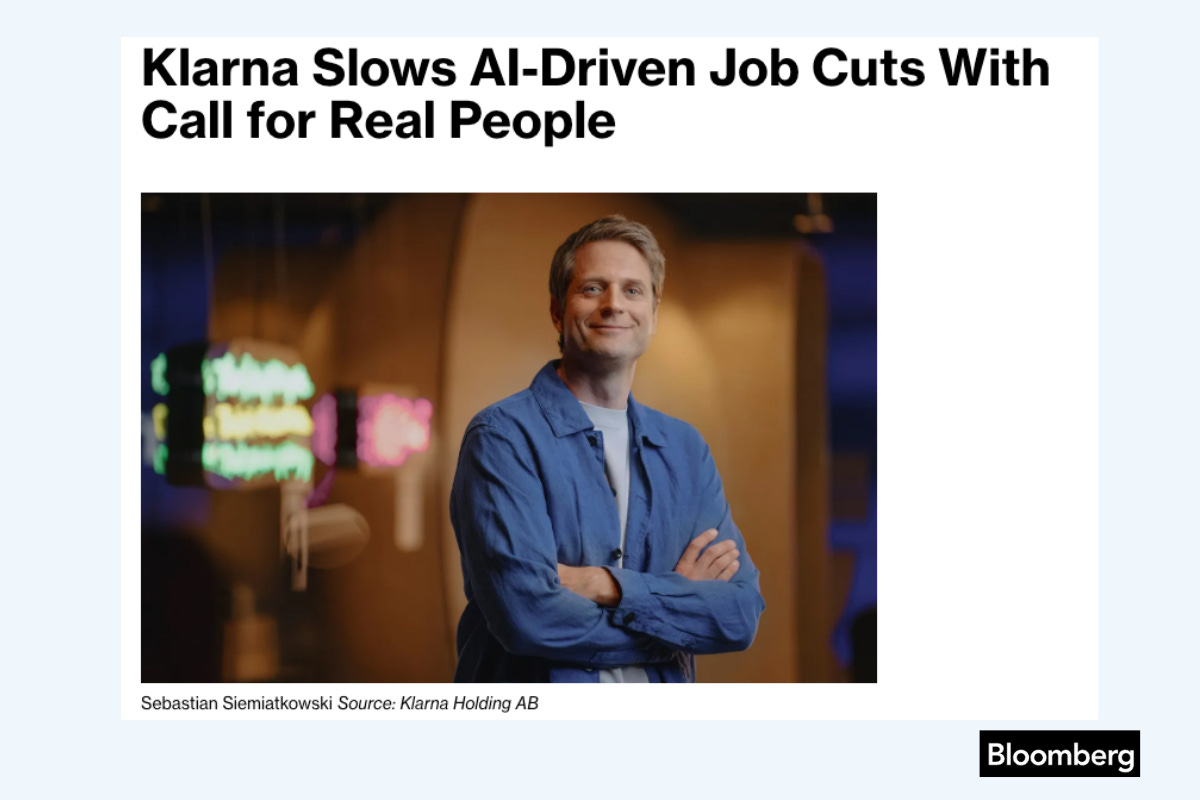
Six weeks ago, Klarna's CEO admitted what many of us already suspected: they pushed too hard on AI—and it backfired.
What began as a bold cost-cutting experiment for this Swedish financial services company ended with a rare reversal. After laying off thousands and automating its customer service with chatbots, Klarna is now rehiring. Real people. Live humans. In his own words: "Cost... seems to have been a too predominant evaluation factor."
Translation: they chased efficiency and lost the plot.
This isn't a story about technology failure. It's a case study in what happens when organizations mistake tools for strategy.
The Missed Opportunity: Strategic Stewardship
I don't want to pile on. Klarna's leadership wasn't wrong to explore AI automation. Their execution, however, reflected a common and dangerous pattern: implementing tactical solutions without strategic guardrails.
They reduced overhead. They also reduced trust.
Customers noticed the drop in service quality. Internally, morale took a hit. And externally? Their IPO plans were delayed. That short-term cost savings came bundled with long-term reputational debt.
Klarna became the cautionary tale. But it didn't have to be.
A Better Way: The Strategy First Brief
Before any AI implementation, I recommend a simple exercise: the Strategy First Brief. It's a one-page framework that forces you to answer four critical questions before you deploy:
What problem are we actually solving?
How will humans and AI work together?
What does success look like?
What guardrails will protect us if things go wrong?
For Klarna, this might've looked like:
Challenge: Can we reduce customer service costs without compromising brand trust?
Desired Outcome: Improved operational efficiency and elevated customer experience—supporting long-term IPO goals.
Human-AI Partnership: AI handles volume. People handle nuance. Every customer knows they can reach a human.
Guardrails: Track NPS, monitor service response times, and flag customer complaints in real time. If trust dips, we adjust.
This takes five minutes to draft—and could've saved them months of damage control.
If you're planning any AI rollout—or advising someone who is—this is the tool I recommend starting with.
👉 Click here to download the Strategy First Brief
But It's Not Just About Klarna
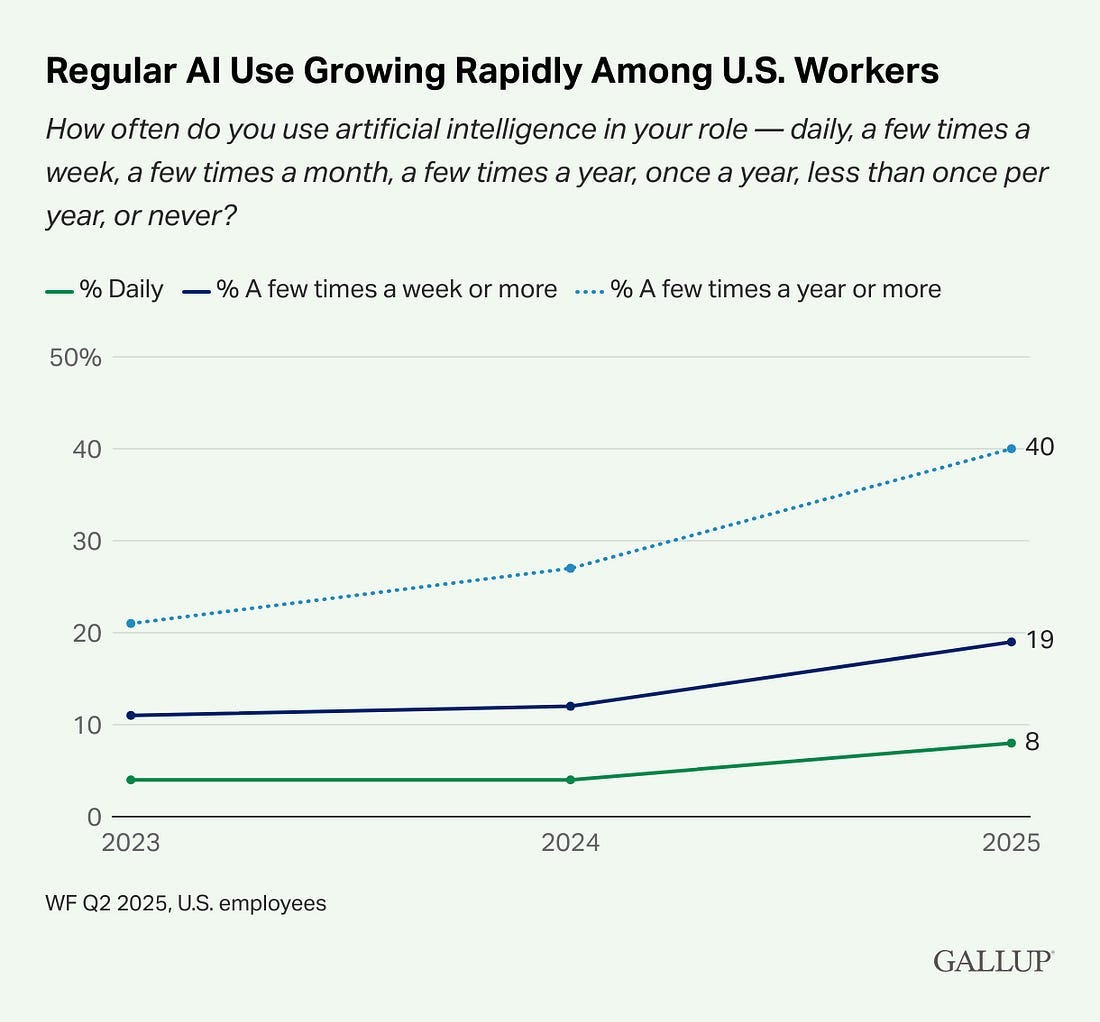
New Gallup data shows Klarna isn't an outlier—they're the norm. While 44% of organizations are integrating AI, only 22% have communicated a clear strategy for doing so.
The result? The most common AI challenge isn't technical—it's "unclear use case or value proposition." Only 16% of employees strongly agree their AI tools are actually useful.
Sound familiar? That's what happens when you lead with tools instead of strategy.
Here's the reality: AI isn't plug-and-play. It's plug-and-plan.
The Gallup research reveals something telling: when employees strongly agree that leadership has communicated a clear AI plan, they're three times as likely to feel prepared to work with AI. Strategy isn't just nice-to-have—it's the difference between adoption and abandonment.
You don't need to be technical. You need to be strategic. You need frameworks that keep shiny tools aligned with your actual business goals. That's what Strategy First is about.
For Those New Here…
I've shared the Strategy First Brief before—both in the book and on this Substack. But if you're new, here's the quick version:
The Strategy First Brief is a one-page planning tool that keeps technology projects tethered to customer trust, brand equity, and long-term value.
Think of it as your BS filter for AI adoption.
You can download the template below, or get your copy of the book if you want to go deeper.
👉 Click here to download the Strategy First Brief
Final Thought
Klarna's CEO deserves credit for course-correcting. That kind of transparency is rare. But the better move would've been getting the strategy right before deployment.
The lesson for the rest of us?
Don't just ask what AI can do. Ask what it should do—and what it might break along the way.
That's strategy first.